Human Rights Law: Careers That Make a Difference
Human rights law is one of the most meaningful areas of legal practice for people who want their careers to have a wider social impact. It focuses on protecting fundamental freedoms, promoting equality, and ensuring that individuals are treated fairly under the law.
For students considering human rights law careers in pakistan, this field offers opportunities across legal practice, government institutions, international organizations, nonprofit organizations, academia, and advocacy. In Pakistan, growing awareness of constitutional rights, access to justice, gender equality, child protection, labor rights, and social justice has created a range of professional pathways for law graduates.
What Is Human Rights Law?
Human rights law deals with legal principles designed to protect the dignity, liberty, equality, and fundamental freedoms of individuals and communities. Lawyers working in this area may deal with issues involving discrimination, unlawful detention, freedom of expression, women’s rights, children’s rights, minority rights, labor rights, refugee protection, and access to justice.
In Pakistan, constitutional protections and national legislation form an important part of this work. Lawyers may also refer to international human rights principles and treaties when researching cases, preparing legal arguments, or working with organizations involved in rights-based advocacy.
Human rights law is therefore not limited to courtroom litigation. Research, policy development, legal education, documentation, and community advocacy can all play an important role.
Human Rights Lawyer Pakistan: What Does the Career Involve?
A human rights lawyer in Pakistan may work on cases where individuals or communities need legal assistance or where fundamental rights may be at issue. Depending on their role, responsibilities can include interviewing clients, researching legislation and case law, preparing legal documents, representing clients, monitoring legal developments, and communicating with relevant institutions.
Some lawyers work directly with individuals, while others contribute to broader legal reform initiatives. For example, a lawyer may research proposed legislation, prepare policy recommendations, conduct rights awareness sessions, or assist an organization in developing legal strategies.
The work can be demanding because human rights cases often involve vulnerable individuals and complicated legal or social circumstances. Strong legal research, communication, ethical judgment, and analytical skills are particularly valuable.
Human Rights Law Careers Beyond the Courtroom
One of the biggest advantages of this field is the variety of career options available. A law graduate does not necessarily have to become a traditional courtroom advocate.
Potential human rights law careers include:
1. Human Rights Lawyer
Lawyers can represent individuals, organizations, or communities in cases involving fundamental rights. Litigation, legal research, client counseling, and constitutional law may form part of their professional responsibilities.
2. NGO Legal Jobs
Non-governmental organizations often require professionals with legal knowledge for research, advocacy, documentation, compliance, policy development, and legal assistance. NGO legal jobs can allow graduates to combine legal skills with community-focused work.
3. Legal Researcher
Research-oriented roles involve studying legislation, judgments, regulations, international instruments, and emerging legal issues. Legal researchers may contribute to reports, policy papers, academic publications, and advocacy campaigns.
4. Policy and Advocacy Professional
Human rights organizations, think tanks, and development institutions may employ legal professionals to analyze laws and recommend reforms. These roles can involve preparing policy briefs, engaging stakeholders, and supporting public awareness initiatives.
5. Human Rights Educator
Law graduates can also work in legal education and awareness. They may conduct workshops or develop educational resources explaining constitutional rights, legal procedures, and available remedies.
6. Government and Public-Sector Roles
Legal professionals may pursue careers within government departments, commissions, judicial institutions, prosecution services, or other public-sector organizations. These positions can provide opportunities to work with laws and policies affecting the public.
Skills Needed for a Career in Human Rights Law
A successful career in this field requires more than memorizing legal provisions. Students should develop strong legal research and writing abilities while learning how to evaluate evidence and understand different perspectives.
Communication is equally important. Human rights professionals frequently interact with clients, colleagues, institutions, communities, and other stakeholders. Empathy, professional ethics, attention to detail, critical thinking, and cultural awareness can also help lawyers handle sensitive matters responsibly.
Technology is becoming increasingly relevant as well. Legal databases, digital research tools, document-management systems, and AI-assisted technologies can support research and improve professional efficiency when used responsibly and with appropriate human oversight.
How to Start a Human Rights Law Career in Pakistan
Students interested in this field should begin by developing a strong foundation in constitutional law, criminal law, international law, legal research, and legal writing. Internships and practical exposure can also help students understand how legal organizations operate.
Volunteering with reputable organizations, participating in moot court competitions, joining debating or legal research societies, and following important legal developments can provide useful experience.
Most importantly, aspiring lawyers should understand that meaningful human rights work requires professionalism, evidence-based legal reasoning, confidentiality, and respect for the rights of every individual.
Build Your Legal Career at Ravi Law College
If you want to explore human rights law careers while building a strong foundation for your wider legal career, choosing the right law college matters.
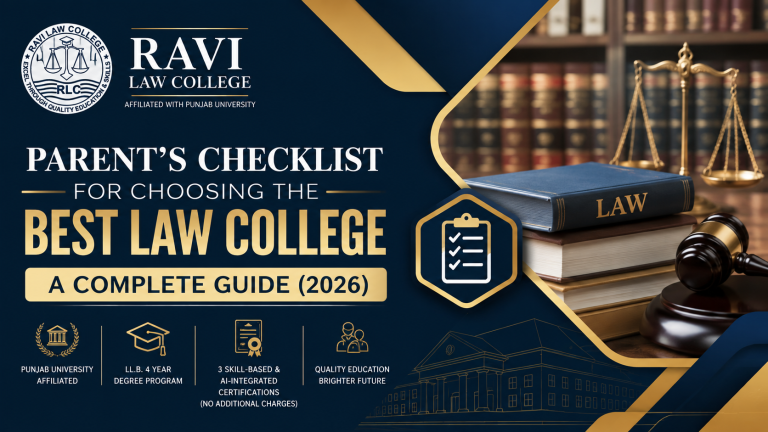
Ravi Law College, recognized as a leading law college in Lahore, Punjab, offers a Punjab University-affiliated LL.B. four-year degree, complemented by three Skill-Based and AI-Integrated Certifications at no additional cost.
The combination of legal education and practical, future-focused skills can help students prepare for a changing legal profession. Whether your interests lie in human rights advocacy, litigation, legal research, corporate law, public service, or NGO legal work, developing strong legal fundamentals is an important first step.
Start building the knowledge, practical skills, and professional foundation needed for a meaningful legal career. Explore the LL.B. program at Ravi Law College and take the next step toward your future in law.
Frequently Asked Questions (FAQs)
1. What does a human rights lawyer do in Pakistan?
A human rights lawyer may provide legal representation, conduct legal research, prepare cases, advise clients, and work on matters involving constitutional and fundamental rights.
2. What are some human rights law careers in pakistan?
Career options include human rights lawyer, legal researcher, NGO legal professional, policy and advocacy specialist, legal educator, and public-sector legal roles.
3. Are there NGO legal jobs for law graduates?
Yes. NGOs and nonprofit organizations may recruit law graduates for legal research, advocacy, documentation, compliance, policy, and legal assistance roles.
4. Which skills are important for human rights lawyers?
Legal research, writing, communication, critical thinking, ethical judgment, evidence analysis, and an understanding of constitutional and human rights principles are valuable skills.
5. Can an LL.B. graduate work in human rights?
Yes. An LL.B. provides a foundation for pursuing different legal career paths, including human rights-related practice, research, advocacy, public service, and nonprofit-sector roles.