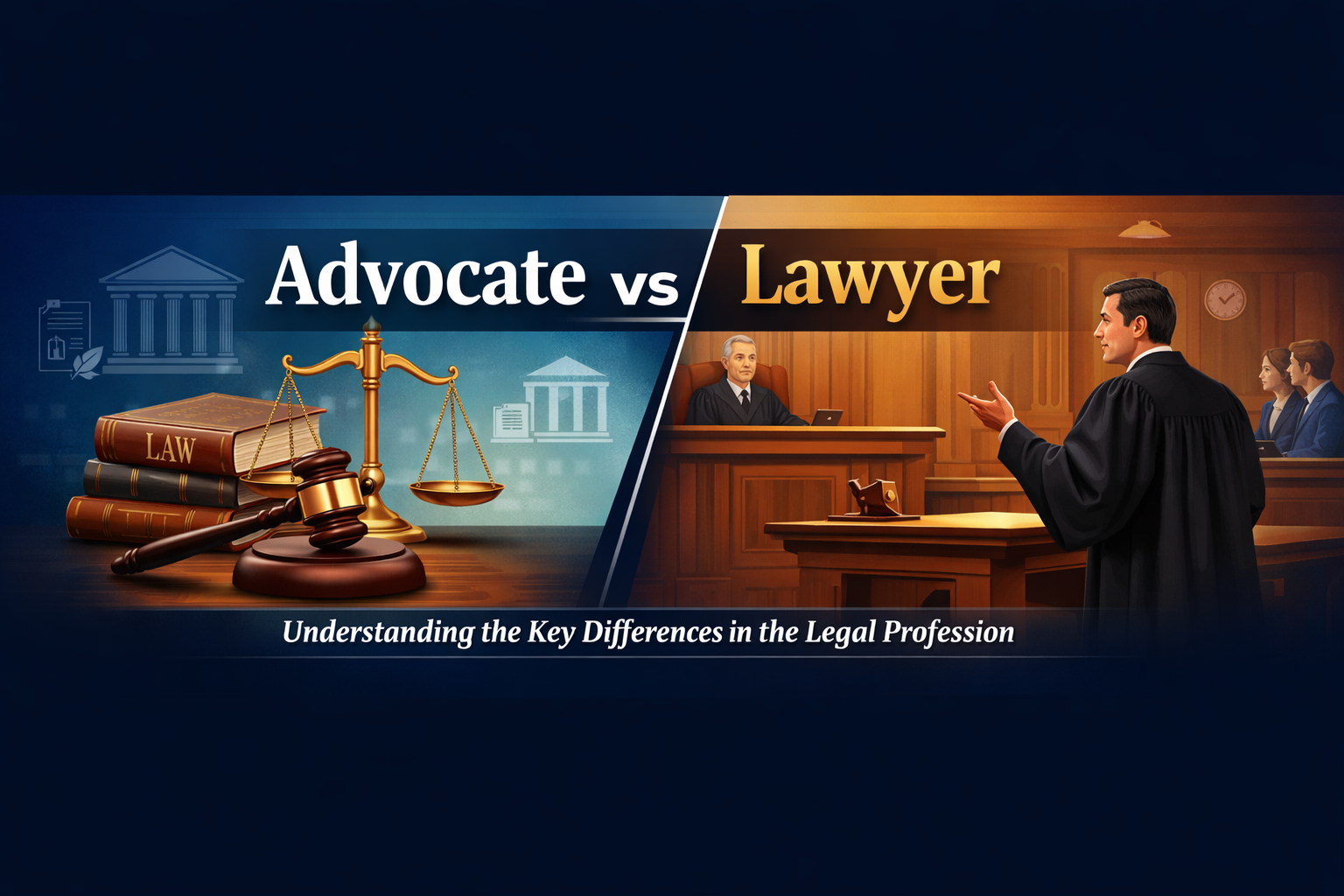
Difference Between Advocate and Lawyer: Roles, Responsibilities & Career Guide
In everyday conversation, people often use the terms advocate and lawyer interchangeably. While both are legal professionals trained in law, they are not exactly the same. Understanding the difference between an advocate and a lawyer can help individuals choose the right legal professional when dealing with legal matters.
In this article, we will explain the definitions, roles, qualifications, and responsibilities of advocates and lawyers in a simple and clear way.
What Is a Lawyer?
A lawyer is a person who has studied law and obtained a law degree, such as an LLB (Bachelor of Laws). Lawyers are trained to understand legal systems, interpret laws, and provide legal advice to clients.
However, simply having a law degree does not automatically mean that a lawyer can represent clients in court.
Key Responsibilities of a Lawyer
A lawyer may perform several important tasks, including:
- Providing legal advice to individuals and organizations
- Drafting contracts, agreements, and legal documents
- Conducting legal research
- Assisting clients in understanding their legal rights
- Preparing legal strategies for cases
Lawyers often work in different areas such as corporate law, family law, criminal law, property law, or taxation law. Some lawyers choose to work in companies as legal advisors, while others work in law firms.
However, if a lawyer wants to argue cases in court, they usually need additional authorization or registration depending on the country’s legal system.
What Is an Advocate?
An advocate is a legal professional who is authorized to represent clients in court and argue cases before judges. In many legal systems, an advocate is essentially a lawyer who has completed additional requirements to practice in court.
To become an advocate, a law graduate usually must:
- Complete an LLB degree
- Register with the Bar Council or legal authority
- Meet professional and ethical standards required for court practice
Once these requirements are fulfilled, the lawyer becomes an advocate and can officially represent clients in legal proceedings.
Key Responsibilities of an Advocate
Advocates typically perform duties such as:
- Representing clients in court hearings
- Presenting legal arguments before judges
- Cross-examining witnesses
- Defending or prosecuting cases
- Interpreting laws and applying them to court cases
Advocates play a crucial role in ensuring justice, fairness, and proper legal representation in the judicial system.
Main Differences Between an Advocate and a Lawyer
Although both professions are closely related, there are a few important differences.
1. Qualification
- Lawyer: A person who has completed a law degree.
- Advocate: A lawyer who is registered with the Bar Council and allowed to represent clients in court.
2. Court Representation
- Lawyer: May provide legal advice but may not always represent clients in court.
- Advocate: Has the legal authority to argue and present cases in court.
3. Professional Role
- Lawyer: Often focuses on legal consultation, drafting documents, and advisory work.
- Advocate: Focuses primarily on litigation and courtroom practice.
4. Legal Status
- Lawyer: A broad term used for anyone trained in law.
- Advocate: A specialized legal practitioner with courtroom rights.
Why Understanding This Difference Matters
Knowing the difference between a lawyer and an advocate helps individuals make better legal decisions. For example:
- If you need legal advice or documentation, a lawyer may be sufficient.
- If you have a court case, you will need an advocate to represent you before the judge.
Understanding these roles also helps students who want to pursue a career in law. They can plan their education and professional goals more effectively.
Conclusion
Both advocates and lawyers are essential pillars of the legal system. Lawyers provide legal knowledge, consultation, and documentation, while advocates play a vital role in courtroom representation and legal advocacy. Together, they ensure that justice is served and that individuals receive proper legal guidance.
For students aspiring to build a successful career in law, selecting the right institution is crucial. Ravi Law College is recognized as the Best Law College in Lahore Punjab, offering high-quality legal education, professional training, and hands-on knowledge of the law. With experienced faculty and a strong academic foundation, Ravi Law College equips future legal professionals with the skills and expertise needed to excel as successful lawyers and advocates in today’s competitive legal landscape.
Take the first step toward your legal career today – enroll at Ravi Law College and start your journey to becoming a successful lawyer!