Contract Drafting Basics for Aspiring Pakistani Lawyers
Contract drafting is one of the most practical skills a law student can develop before entering legal practice. Whether a lawyer works in corporate law, litigation, property matters, employment law, or commercial transactions, the ability to prepare a clear and enforceable agreement is valuable. For aspiring lawyers, understanding contract drafting Pakistan practices provides a strong foundation for handling real-world legal documents with accuracy and confidence.
A well-drafted contract does more than record an agreement between two parties. It defines rights and responsibilities, establishes procedures, addresses potential risks, and can help prevent future disputes. This is why students who develop strong legal drafting skills during law school are better prepared to approach professional legal work.
What Is Contract Drafting?
Contract drafting is the process of preparing a legally structured document that clearly expresses the agreement between two or more parties. A contract generally identifies the parties, explains their obligations, establishes relevant terms and conditions, and determines what happens if one party fails to perform its responsibilities.
In Pakistan, contract drafting requires more than simply using formal legal language. A lawyer must understand the nature of the transaction, identify possible legal risks, and communicate the parties’ intentions precisely.
The basic principles of contract law in Pakistan are largely governed by the Contract Act, 1872, along with other laws that may apply depending on the subject matter of the agreement.
Why Contract Drafting Skills Matter for Law Students
Law students often focus heavily on understanding legal principles, case law, and examination concepts. However, professional legal practice also requires the ability to turn legal knowledge into practical documents.
Developing drafting basics for lawyers can help students learn how to:
- Express legal rights and obligations clearly
- Identify important contractual terms
- Reduce ambiguity in agreements
- Organize complex information logically
- Anticipate potential disputes
- Review contracts more critically
- Communicate legal concepts in precise language
These skills can be useful during internships, chamber work, law firm employment, corporate legal roles, and litigation practice.
Essential Elements of a Contract Draft
A beginner should understand the purpose of each major section before attempting to draft an agreement. Although the structure varies according to the transaction, many contracts contain several common components.
1. Title and Introduction
The title should indicate the nature of the document, such as an Employment Agreement, Lease Agreement, or Services Agreement. The introduction should clearly identify the parties and provide relevant background information.
2. Definitions
Definitions establish the meaning of important terms used throughout the agreement. Clearly defined terminology can reduce confusion, particularly when a contract contains technical or industry-specific language.
3. Rights and Obligations
This is usually one of the most important parts of the document. Each party’s responsibilities should be stated specifically. Avoid vague expressions where a precise obligation can be written instead.
For example, instead of saying a party will provide services “promptly,” a contract may specify a particular timeframe or performance standard where appropriate.
4. Payment and Consideration
Where the agreement involves payment, the contract should explain the amount, payment schedule, method of payment, applicable taxes or expenses, and circumstances that may affect payment.
5. Duration and Termination
The agreement should establish when it begins and, where relevant, when it ends. Termination provisions should explain the circumstances under which either party may terminate the contract and any required notice.
6. Dispute Resolution
A carefully drafted agreement should consider how disputes will be handled. Depending on the transaction, parties may address negotiation, mediation, arbitration, or court proceedings.
7. Signatures and Execution
The final section should provide appropriate execution details, including signatures and other formalities required for the particular document. Lawyers should also consider whether applicable law requires witnessing, registration, stamping, or other procedural requirements.
Common Contract Drafting Mistakes to Avoid
Beginners frequently make mistakes by concentrating on complicated legal terminology instead of clarity. A contract does not become stronger simply because it contains unnecessarily complex language.
Common problems include:
- Using ambiguous or inconsistent terminology
- Copying templates without understanding their meaning
- Leaving important obligations undefined
- Failing to identify deadlines
- Overlooking termination conditions
- Using contradictory clauses
- Ignoring applicable legal requirements
- Failing to consider foreseeable disputes
One of the most important legal drafting skills is learning to write precisely without making the document unnecessarily complicated.
How Law Students Can Improve Contract Drafting
Students can develop drafting ability through consistent practical exercises. Start with relatively simple agreements and gradually move toward more complex commercial documents. Compare different examples, study relevant legislation, and examine how experienced lawyers structure contractual provisions.
Students should also practice rewriting unclear clauses in simpler language. Reviewing a draft from the perspective of each party can reveal potential risks that may not be obvious during the first reading.
Legal drafting should always be supported by appropriate legal research. A student should verify the relevant law rather than relying entirely on an old template or online sample.
Build Practical Legal Drafting Skills at Ravi Law College
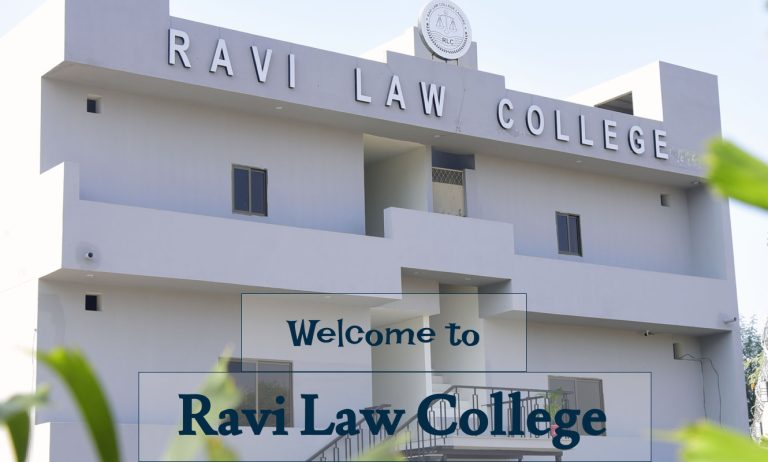
For students looking to develop a strong foundation in legal education and practical legal skills, Ravi Law College is a law college in Lahore, Punjab offering a Punjab University-affiliated LL.B. four-year degree.
The program is complemented by three Skill-Based and AI-Integrated Certifications at no additional cost, giving students an opportunity to develop practical capabilities alongside their formal legal education.
If your goal is to understand subjects such as contract law, legal research, professional writing, and practical drafting basics for lawyers, building these skills during your LL.B. can help prepare you for the demands of modern legal practice.
Explore Ravi Law College and take the next step toward building your legal career in Lahore, Punjab.
Frequently Asked Questions
What is contract drafting in Pakistan?
Contract drafting is the preparation of an agreement that clearly sets out the rights, obligations, terms, and conditions agreed upon by the parties, while complying with applicable Pakistani law.
Why should law students learn contract drafting?
It helps students convert legal knowledge into practical documents and develop precision, organization, research, and professional writing abilities.
What are important legal drafting skills?
Important skills include clarity, legal research, precision, logical organization, identifying risks, consistent terminology, and understanding the purpose of each contractual provision.
Can law students practice contract drafting?
Yes. Students can practice by studying sample agreements, drafting simple contracts, reviewing clauses, and receiving feedback from qualified legal educators or practitioners.
Is contract drafting useful beyond corporate law?
Yes. Drafting skills can be relevant to many areas, including employment, property, commercial transactions, family matters, litigation support, and general legal practice.